
🎯[Key Highlights: 3 Takeaways]
- Early Warning Signs: A prolonged febrile seizure (status epilepticus) lasting over 20 minutes in a 7-month-old is a critical clinical indicator for Dravet Syndrome, distinguishing it from simple febrile convulsions.
- Critical Treatment Caution: Early genetic confirmation is vital to avoid Sodium Channel Blockers (e.g., Carbamazepine), which are contraindicated and can severely exacerbate seizures in SCN1A-related disorders.
- Proactive Clinical Management: Identifying the SCN1A variant allows for immediate transition to targeted therapies and prevents further developmental plateaus by managing unique triggers like hyperthermia and photosensitivity.
- Explore 3billion’s diagnostic stats for SCN1A-related disorders
1. Clinical Presentation (The “Diagnostic Odyssey”)
The patient is a 7-month-old male with no significant prenatal or birth history. He presented to the ER with a generalized tonic-clonic seizure lasting 25 minutes, triggered by a low-grade fever.
- Initial Diagnosis: Simple febrile seizure.
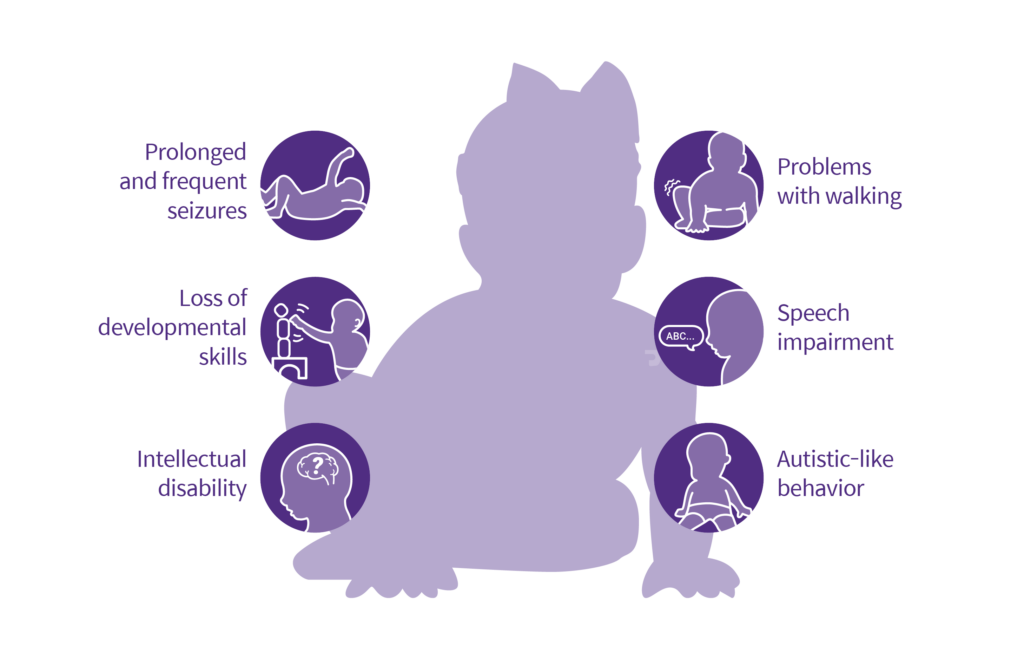
- Evolution: Over the following three months, the patient experienced recurrent hemiclonic seizures, often alternating sides, and occasionally without fever. Despite starting Phenobarbital, seizure frequency did not diminish.
2. Phenotypic Features (HPO-based)
- Seizure Semiology: Status epilepticus, Hemiclonic seizures, Myoclonic jerks (appearing after age 1).
- Triggers: Hyperthermia (fever, warm baths), Photosensitivity.
- Development: Initial normal development, followed by a noticeable plateau in motor and cognitive milestones after the onset of seizures.
- Keywords for Search: Refractory febrile status epilepticus, SCN1A variant, Dravet syndrome early signs.
3. Genomic Findings & Pathogenicity
Genetic testing via a Targeted Epilepsy Panel identified a de novo heterozygous nonsense mutation in the SCN1A gene (c.1234C>T, p.Arg412X).
- Clinical Correlation: This variant leads to a truncated sodium channel protein, causing interneuron hypoexcitability—a hallmark of Dravet Syndrome.
- Crucial Insight: Early detection is vital because Sodium Channel Blockers (e.g., Carbamazepine, Phenytoin) can actually exacerbate seizures in SCN1A-related disorders.
4. Differential Diagnosis
- PCDH19-related Epilepsy: (Clustering of seizures, primarily in females).
- SCN1A-Negative SMEI: (Requires Whole Exome Sequencing to identify rarer loci like GABRG2).
👉 “If you have a patient with similar clinical presentations, please request a consultation today. Our experts will guide you to the most appropriate genetic testing plan tailored to your patient’s needs.”
답글 남기기
댓글을 달기 위해서는 로그인해야합니다.