[작성자:] Ashley Zhu
-

5 reasons patients with CA/DD/ID should get whole exome/genome sequencing tests
In 2021, the American College of Medical Genetics and Genomics (ACMG) suggested the following: “We strongly recommend that ES/GS be considered as a first- or second-tier test for patients with CA/DD/ID”, where ES/GS means exome sequencing and genome sequencing, respectively. Here, CA, DD, ID means congenital anomalies, developmental delay, and intellectual disability, respectively. There are two main…
-

Eye rare disease: Interview with Dr. Jinu Han
The third guest of Good Doctor Season 1 is Professor Jinu Han from Gangnam Severance Hospital. Professor Jinu Han is a specialist in pediatric eye diseases and genetics. He has been working towards improving diagnosis of rare eye disease patients with 3billion. Chief Business Officer (CBO) Genie Lee and Chief Medical Officer (CMO) Gohun Seo…
-
Validation of poor-quality pathogenic variants from next-generation sequencing results
Although whole exome sequencing (WES) can efficiently cover more than 90% of the protein coding sequence (CDS), some cases make it very difficult to accurately detect variants in the CDS region via WES using short reads1,2. Thus, we would like to discuss one of those cases. This patient, born in 1952, has shown recurrent falls,…
-
Reanalysis and reclassification, why are they important?
With the rapid development of genomic medicine and the increased use of WES/WGS tests, it is crucial to note the importance of continuous reanalysis versus one-time data analysis. Why? Results may change as more information accumulates. Through reanalysis, undiagnosed patients may be diagnosed, or former diagnosis results may become invalid. What is the difference between…
-
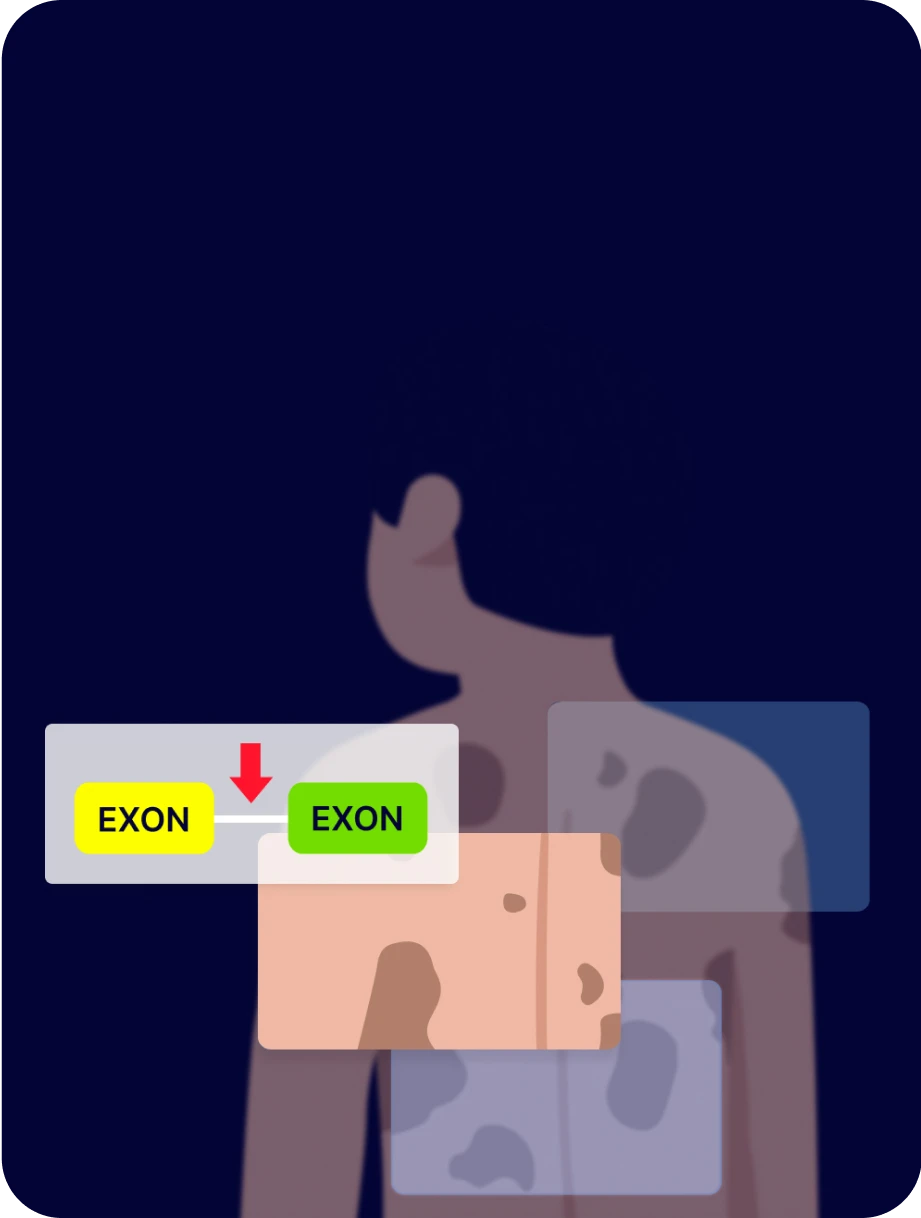
Type I Neurofibromatosis / NF1 intron case
Patient H was a 6-year-old Korean boy who was clinically suspected of having type I Neurofibromatosis. He presented with general symptoms of type 1 neurofibromatosis which was the presence of Multiple café-au-lait spots and no other family members were affected. The patient was ordered a single gene sequencing test in a separate clinical laboratory in…
-

Comparing reanalysis policies of 5 rare disease diagnostics companies
Although many are struggling, the initial diagnosis rate of rare diseases remains low. It is because there is still insufficient information and the symptoms are very diverse. Therefore, diagnosis of rare diseases should not be limited to a single analysis, so the importance of reanalysis is inevitably greater. In this article, we will take a…
-

Cardiac genetic testing, Fabry disease: Interview with Dr. Geu Ru Hong
‘The Good Doctors’ is a programmed series of interviews to meet doctors who face patients with rare diseases every day and hear their stories on site. These interviews were planned to help us provide better insight for physicians by recording how genetic testing for rare diseases is conducted, how it’s used at clinical sites, and…
-

Meet the Enhanced Whole Exome Sequencing (WES) with Improved Coverage
In Feb 2019, 3billion launched genetic testing services for rare disease diagnoses based on whole exome sequencing (WES) technology. Since then, more than 40,000 patients have been sequenced at 3billion and approximately 45% of these patients have completed their diagnostic journey with us by receiving a clear molecular diagnosis. However, there are still 55% of…
-

Why do WES test results vary despite the same sequencing method?
Recently, WES/WGS tests have become more widely used to diagnose patients with rare diseases. Even if the same WES method is performed on the same patient, the final result may be different depending on the entity. Why is there a difference? What should be considered when choosing? We will look at the main factors that…
-
Genetic testing for pediatric disorders
Getting genetic testing for pediatric disorders isn’t really a common situation, but it can happen at any time. Genetic testing in the context of pediatric disorders involves analyzing a child’s DNA to identify genetic changes or mutations that may cause or contribute to various health conditions. This testing is essential for diagnosing a wide range of genetic…