[작성자:] Claire
-

What’s New in CHARGE Syndrome Research: A 2024–2026 Update
📍Key Takeaways A Well-Characterized Syndrome With Much Still to Learn CHARGE syndrome is a rare, complex congenital disorder most commonly caused by pathogenic variants in the CHD7 gene. The acronym reflects its cardinal features: Coloboma, Heart defect, Atresia of the choanae, Retardation of growth, Genital hypoplasia, and Ear anomaly/deafness. CHD7 was identified as the causative…
-
CHARGE Syndrome 연구의 최전선 : 2024~2026 무엇이 새로워졌을까
📍핵심 정리 CHARGE Syndrome, 아직 모르는 게 많습니다 CHARGE syndrome은 많은 경우에 CHD7 유전자의 병적 변이에 의해 발생하는 희귀 복합 선천성 증후군입니다. 명칭은 주요 특징의 앞 글자를 딴 것으로, Coloboma(눈 기형), Heart defect(심장 기형), Atresia of choanae(후비공 폐쇄), Retardation of growth(성장 지연), Genital hypoplasia(생식기 저형성), Ear anomaly/deafness(귀 기형/난청)를 가리킵니다. CHD7가 원인 유전자로 밝혀진 것은 2004년이었습니다.…
-
-
Genetic Variants Determine Prognosis: Genotype–Phenotype Correlations in Congenital and Infantile Nephrotic Syndrome
📍 Key Takeaways • More than 50% of CNS and infantile NS cases have a monogenic cause; four genes — NPHS1, NPHS2, WT1, and LAMB2 — account for two-thirds of all cases. • Even within the same gene, earlier onset (CNS) is associated with a more severe genotype and faster progression to renal failure. •…
-
유전자 변이가 예후를 결정합니다 – 선천성·영아성 Nephrotic Syndrome의 Genotype–Phenotype 상관관계
📍핵심 정리 1. CNS·영아성 NS의 50% 이상은 단일유전자 원인을 가지며, NPHS1·NPHS2·WT1·LAMB2 4개 유전자가 전체의 2/3를 설명합니다.2. 같은 유전자 변이라도 발현 시점이 이를수록(CNS) 더 심한 유전형, 더 빠른 신부전 경과와 연관됩니다.3. Compound heterozygous NPHS1 변이, NPHS1/WT1 또는 NPHS1/NPHS2 digenic 변이는 이식 필요성과 강하게 연관됩니다.4. 유전자 검사 결과 없이는 스테로이드 반응성 예측, 이식 전략, 가족상담을 체계적으로 수행하기…
-
Resultados clave en el diagnóstico de enfermedades raras en México 2025
En 2025, 825 pacientes en México lograron alcanzar un diagnóstico definitivo para sus enfermedades raras a través de 3billion. Los pacientes con enfermedades raras suelen esperar un promedio de 4 a 6 años(Fatoumata Faye, 2024) antes de recibir un diagnóstico preciso. La mayoría pasa años recorriendo decenas de hospitales y sometiéndose a innumerables pruebas repetitivas,…
-
Key Diagnostic Outcomes from Mexico in 2025
In 2025, 825 patients received rare disease diagnoses through 3billion in Mexico. Rare disease patients wait an average of 4 to 6 years(Fatoumata Faye, 2024) before receiving an accurate diagnosis. Most spend years cycling through dozens of hospitals and undergoing countless repeated tests, only to be told the cause remains unknown. Mexico is no exception…
-
진단 방랑을 끝낸 멕시코 사례들: 2025년 주요 진단 결과 공개
2025년, 멕시코에서 쓰리빌리언을 통해 825명의 환자가 희귀질환 진단을 받았습니다. 희귀질환 환자는 정확한 진단을 받기까지 평균 4~6년(Fatoumata Faye, 2024)이 걸립니다. 수십 곳의 병원을 전전하고, 수없이 많은 검사를 반복하면서도 ‘원인 불명’이라는 답만 돌아오는 경우가 대부분입니다. 멕시코도 예외가 아닙니다. 오히려 더 가혹한 현실이 기다리고 있습니다. 멕시코 희귀질환 진단의 현실 희귀질환의 약 80%는 유전적 원인을 갖습니다. 즉, 유전자 검사가…
-
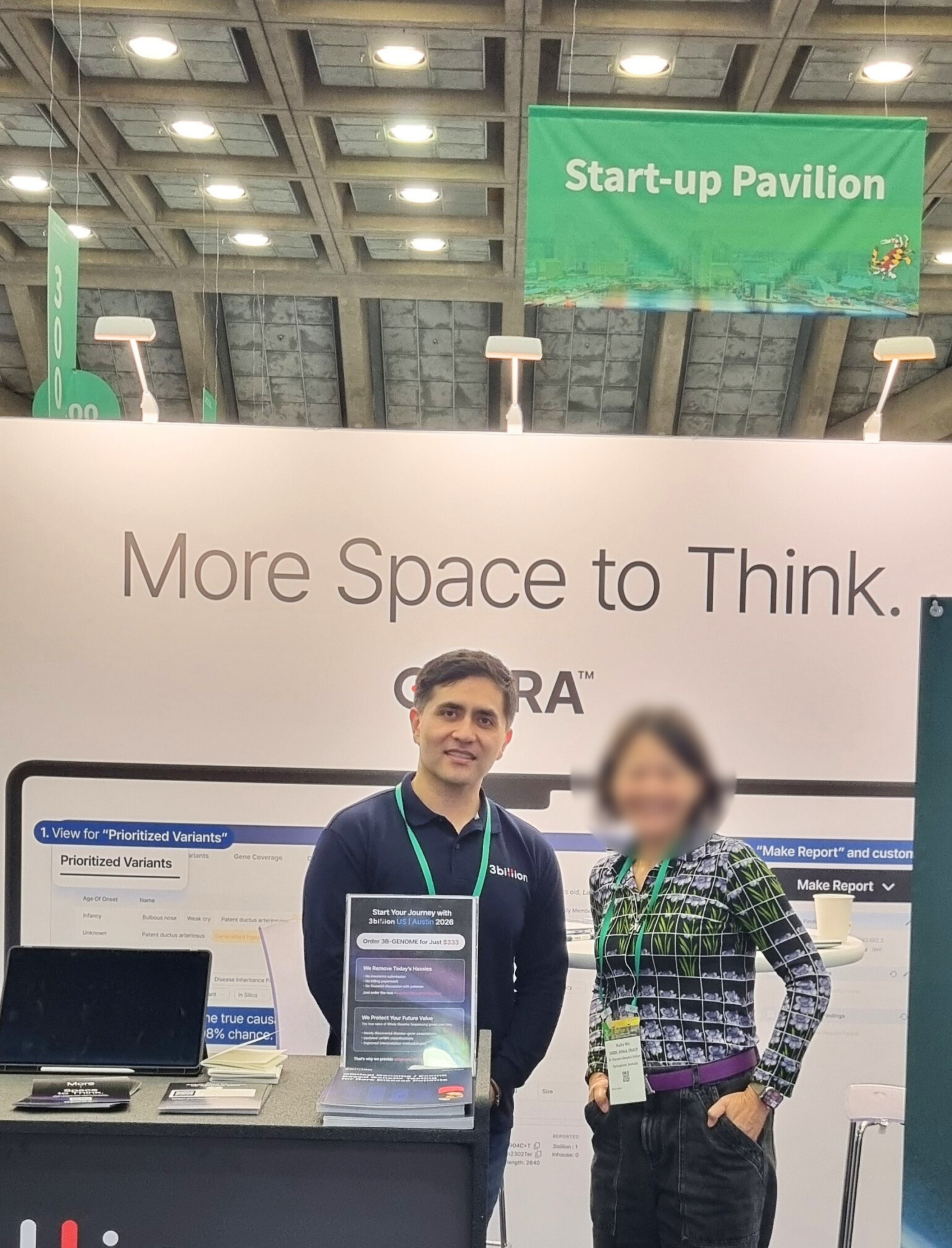
ACMG 2026: 3billion Takes GEBRA to the Global Stage
The American College of Medical Genetics and Genomics (ACMG) is the leading authority in medical genetics and genomics — a professional academic organization spanning clinical research, education, and policy advocacy. At its core, ACMG is dedicated to integrating genetics and genomics across modern medicine, publishing essential guidelines for the medical genetics community including laboratory technical…
-
ACMG 2026 현장 리포트: 3billion, GEBRA로 전 세계 임상의 만나다
ACMG(미국 의학유전학·유전체학회)는 의학 유전학 및 유전체학 분야의 최고 권위 기관으로, 임상 연구, 교육, 정책 옹호를 아우르는 전문 학술 단체입니다. 이 학회는 유전학과 유전체학을 현대 의료 전반에 통합하는 것을 핵심 목표로 삼고 있으며, 실험실 기술 표준, 임상 가이드라인, 전문성 기준 등 의료 유전학 커뮤니티에 필수적인 지침을 개발하고 발표합니다. ACMG Annual Clinical Genetics Meeting은 유전체 의학 분야의…