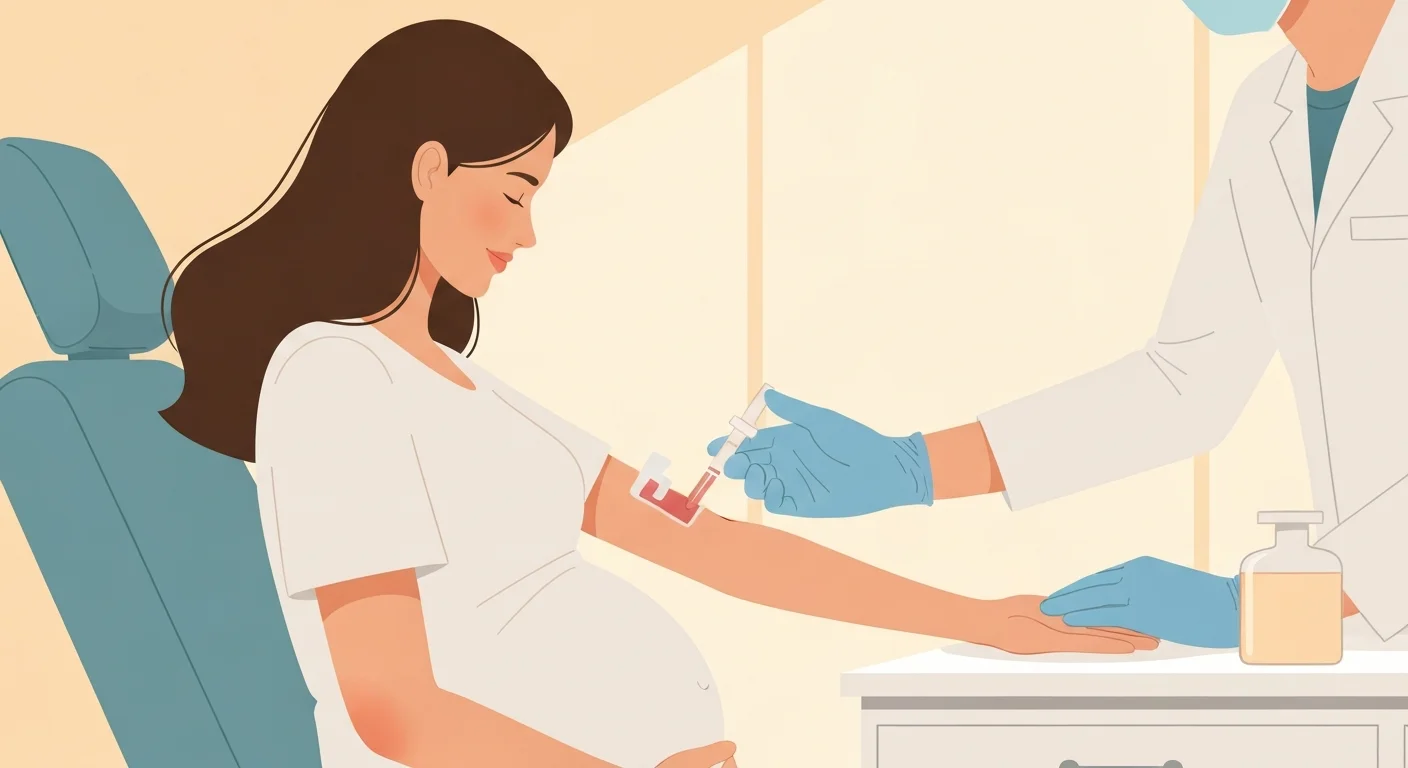
Many parents search for “NIPT gender accuracy,” but medically, NIPT predicts fetal sex by looking for sex chromosome DNA. NIPT (non-invasive prenatal testing) is highly accurate for predicting a baby’s sex, correctly identifying male or female about 98–99% of the time when done after 10 weeks of pregnancy. It reads fragments of the baby’s DNA floating in the mother’s bloodstream, so it needs only a simple blood draw.
Still, no screening test is perfect. NIPT tells you what is very likely, not what is certain. Understanding why helps you read your result with confidence.
Frequently asked questions
How accurate is NIPT for gender?
NIPT predicts fetal sex with about 98–99% accuracy after 10 weeks of pregnancy. Accuracy comes from detecting Y-chromosome DNA in the mother’s blood. It is a screening test, so occasional errors happen and important results deserve confirmation.
When is NIPT accurate enough to tell the sex?
NIPT becomes reliable from about 10 weeks of pregnancy, once enough of the baby’s DNA circulates in the mother’s blood. Testing earlier raises the chance of an unclear or incorrect result because fetal DNA levels are still too low.
Can NIPT be wrong about gender?
Yes, though rarely. Twins, an early blood draw, low fetal DNA, or certain rare biological factors can cause an incorrect sex prediction. Because NIPT screens rather than diagnoses, ultrasound or other testing can confirm the result.
How does NIPT determine if it’s a boy or girl?
NIPT looks for DNA from the Y chromosome, which typically only a male fetus carries. Finding Y-chromosome fragments suggests a boy; finding none suggests a girl. The test measures these fragments in the mother’s blood sample.
Is NIPT for gender the same as diagnosing a genetic condition?
No. Predicting sex is one small output of NIPT. Its main medical purpose is screening for chromosome conditions such as Down syndrome. A positive screen for any condition should always be confirmed with diagnostic testing.
How NIPT reads your baby’s DNA
During pregnancy, small pieces of the placenta’s DNA — which usually matches the baby — pass into the mother’s bloodstream. Scientists call these fragments cell-free fetal DNA. A NIPT lab collects a blood sample and sorts through millions of these fragments.
To predict sex, the lab looks for DNA from the Y chromosome, specifically a gene called SRY that triggers male development. If Y-chromosome DNA appears, the baby is most likely a boy. If none is found, the baby is most likely a girl.
A large review of studies confirmed this approach is dependable after the first weeks of pregnancy, reporting sensitivity and specificity above 98% once testing occurs past 7–10 weeks, as summarized in a JAMA meta-analysis of cell-free fetal DNA testing.

What can lower the accuracy
Accuracy depends heavily on how much fetal DNA is in the sample, a value called the fetal fraction. When it is too low, the test may return an unclear result or, rarely, the wrong one.
- Testing too early. Before 10 weeks, fetal DNA levels are often too low for a confident answer.
- Twins or multiples. DNA from more than one baby can blur the signal, especially if only one twin is male.
- Higher maternal weight. More maternal blood volume can dilute the fetal fraction.
- Rare biology. A vanished twin, certain placental differences, or maternal chromosome variations can occasionally confuse the read.
The U.S. National Library of Medicine notes that NIPT is a screening test rather than a diagnostic one, meaning a result signals probability, not certainty.
Screening versus diagnosis — why the difference matters
NIPT’s main job is not to reveal sex. It screens for chromosome conditions such as trisomy 21 (Down syndrome), trisomy 18, and trisomy 13. Sex prediction is a byproduct of reading the sex chromosomes.
Because it is a screen, a result — whether about sex or a chromosome condition — describes risk. A diagnostic test such as amniocentesis or chorionic villus sampling gives a definitive answer when one is needed. Professional guidance from the American College of Medical Genetics and Genomics emphasizes confirming positive NIPT screens before making irreversible decisions.
When sex prediction carries extra weight
For most families, learning the sex is simply exciting news. But in some families, the answer matters medically. Certain inherited conditions — such as hemophilia or Duchenne muscular dystrophy — are linked to the X chromosome and mostly affect boys.
In these cases, knowing fetal sex early helps a care team plan further testing. If a condition runs in your family, a genetic counselor can explain which tests give the clearest picture and when to pursue them.
How to make sense of your own result
Read a NIPT sex result as a strong probability, not a guarantee. If the answer surprises you, was drawn very early, or matters for a family condition, an ultrasound and a conversation with your provider can clarify things.
Genetic questions rarely stop at one answer. If your family has a history of an inherited disorder, or if a screening result raises new questions, a broader genetic test can look beyond sex chromosomes to the specific genes involved.
When to talk with an expert
If you are weighing what a NIPT result means, or you want to understand your family’s inherited risks before or during pregnancy, a genetic counselor or clinician can guide you to the right next step. When a rare inherited condition is a concern, a detailed genetic test can identify the exact change responsible and give your family clearer answers than screening alone.
From pregnancy to newborn care
NIPT helps parents understand certain genetic information before birth. But once a baby is born, a new set of health questions begins.
3B-NEO is a genomic newborn screening service that helps identify actionable genetic risks early in life. It is designed to support families and clinicians with clearer genetic insights after birth, especially when early monitoring or care may make a meaningful difference.
Because some genetic conditions may not be visible right away, newborn genomic screening can help bring important answers earlier, when families and care teams have more time to plan the right next step.
답글 남기기
댓글을 달기 위해서는 로그인해야합니다.