[카테고리:] 블로그 (Blog)
-

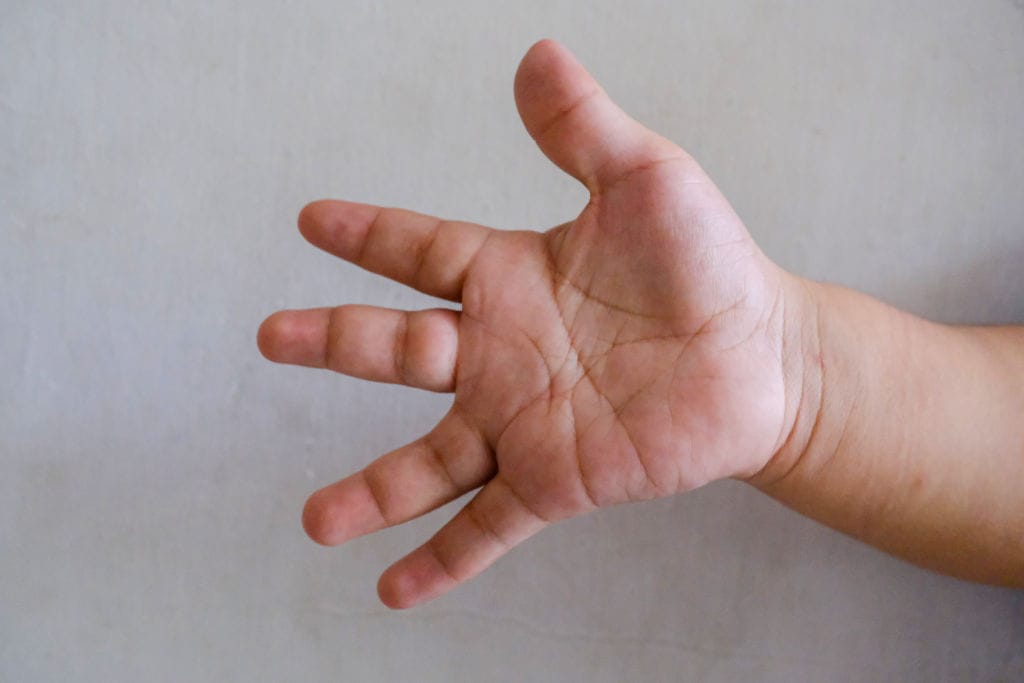
연골저형성증과 연골무형성증, 무엇이 다른가
핵심 요약 1. 같은 유전자, 다른 자리 연골무형성증은 원인이 한 곳에 몰려 있습니다. 환자의 99% 이상이 FGFR3 c.1138 한 자리의 두 변이 중 하나를 가지고, 둘 다 같은 단백질 변화(p.Gly380Arg)를 만듭니다 [9]. 그래서 그 자리만 확인하는 표적 검사로 확진이 됩니다. 연골무형성증 자체의 유전, 진단, 치료는 소아 연골무형성증: 원인 유전자 FGFR3와 최초의 표적 치료제 복스조고에서 별도로…
-
Hypochondroplasia vs. Achondroplasia: What Distinguishes Them
Key summary 1. Two conditions, one gene, two hotspots Achondroplasia has an unusually concentrated molecular basis. More than 99% of patients carry one of two changes at a single position — c.1138G>A or c.1138G>C — and both produce p.Gly380Arg [9]. That concentration is what makes targeted testing so efficient, and what makes it a trap…
-
![[Interpretation Notes #1] 3bCNV: WES vs. Panel Detection Criteria](https://d15q5w6b9vqac5.cloudfront.net/wp-content/uploads/2026/07/24192354/%ED%8C%90%EB%8F%85-1-3bCNV_-WES%EC%99%80-%ED%8C%A8%EB%84%90-%EA%B2%80%EC%B6%9C-%EA%B8%B0%EC%A4%80.png)
[Interpretation Notes #1] 3bCNV: WES vs. Panel Detection Criteria
Analysis Principle: 3bCNV doesn’t read the raw sequence itself — instead, it infers variants using Depth of Coverage (DOC), the number of reads mapped to a region. WES Detection Criterion: WES, with an average coverage of about 100x, calls a CNV only when ≥3 consecutive exons show a change, in order to filter out noise.…
-
[판독노트 #1] 3bCNV: WES와 패널 검출 기준
분석 원리: 3bCNV는 염기서열 자체를 직접 읽는 것이 아니라, 읽힌 Read 수인 Depth of Coverage(DOC)를 이용해 변이를 추론합니다. WES 검출 기준: 평균 Coverage가 약 100x 수준인 WES는 노이즈 차단을 위해 3개 이상의 연속된 Exon(≥ 3 consecutive exons) 변화만 CNV로 판정합니다. Gene Panel 검출 기준: 평균 Coverage가 약 300x 이상으로 높은 Gene Panel은 단일 Exon(≥ 1…
-
Achondroplasia in Children: From the FGFR3 Mutation to Voxzogo, the First Targeted Therapy
Key summary 1. What is achondroplasia? Achondroplasia is a rare skeletal disorder and the most common cause of disproportionate short stature. It occurs in roughly 1 in 15,000 to 40,000 births. Despite its name, cartilage is not absent; rather, the conversion of cartilage into bone (ossification) is disrupted, which limits the growth of the long…
-
소아 연골무형성증: 원인 유전자 FGFR3와 최초의 표적 치료제 복스조고(Voxzogo) 완벽 정리
핵심 요약 1. 연골무형성증이란 어떤 질환인가요? 연골무형성증(Achondroplasia)은 드물지만, 가장 흔한 비대칭성 저신장증(왜소증)을 유발하는 골격계 희귀질환입니다. 전 세계적으로 약 15,000~40,000명당 1명꼴로 발생하며, ‘연골무형성증’이라는 이름과 달리 연골 자체가 없는 것이 아니라, 연골이 뼈로 바뀌는 과정(골화)에 이상이 생겨 긴뼈의 성장이 제한되는 질환입니다. 핵심 특징: 2. 연골무형성증은 왜 생기나요? — 멈추지 않는 ‘성장 브레이크’ 이 질환은 단 하나의 유전자,…
-
[Baby Care #6] 착상혈 보일 때 임신 테스트기 양성 반응 나올까요?
착상혈이 보이는 시기에는 임신 호르몬 수치가 아직 너무 낮아 임신 테스트기에서 양성 반응이 나타나지 않을 수 있습니다. 임신 테스트기는 배아가 성공적으로 착상한 후에만 수치가 크게 증가하는 호르몬인 융모성 성선자극호르몬(hCG)을 측정합니다. 착상혈이 멈춘 후 hCG가 가정용 임신 테스트기로 감지할 수 있는 수준에 도달하기까지는 며칠이 걸릴 수 있습니다. 가장 정확한 결과를 얻으려면 생리 예정일이 지나거나, 착상혈이 멈춘…
-
[Baby Care #6] Implantation Bleeding: Will a Test Be Positive?
A pregnancy test may not be positive during implantation bleeding because hormone levels are likely still too low to be detected. Pregnancy tests measure human chorionic gonadotropin (hCG), a hormone that rises significantly only after the embryo has successfully implanted. It can take several days after implantation bleeding stops for hCG to reach a level…
-

Wondering if you can send samples to 3billion from your country?
Not sure if you can send patient samples to 3billion for genetic testing? The answer is yes. To date, 3billion has successfully received samples from 80 countries across Asia, Europe, the Americas, the Middle East, and Africa. To make international shipping as simple as possible, we’ve put together everything you need to know in one…
-

Solving Undiagnosed Cases with Long-Read Sequencing (Part 1): Finding the Missing Variant in Autosomal Recessive Disease
Summary A Seoul National University Hospital team applied targeted long-read sequencing — a capture-based panel of 56 autosomal recessive genes, not whole-genome — to 78 undiagnosed patients in whom short-read sequencing (SRS) had found only one pathogenic allele. The assay recovered the missing variant in 20 of 78 patients (25.6%): 10 through structural variant detection,…