[작성자:] Sookjin Lee
-
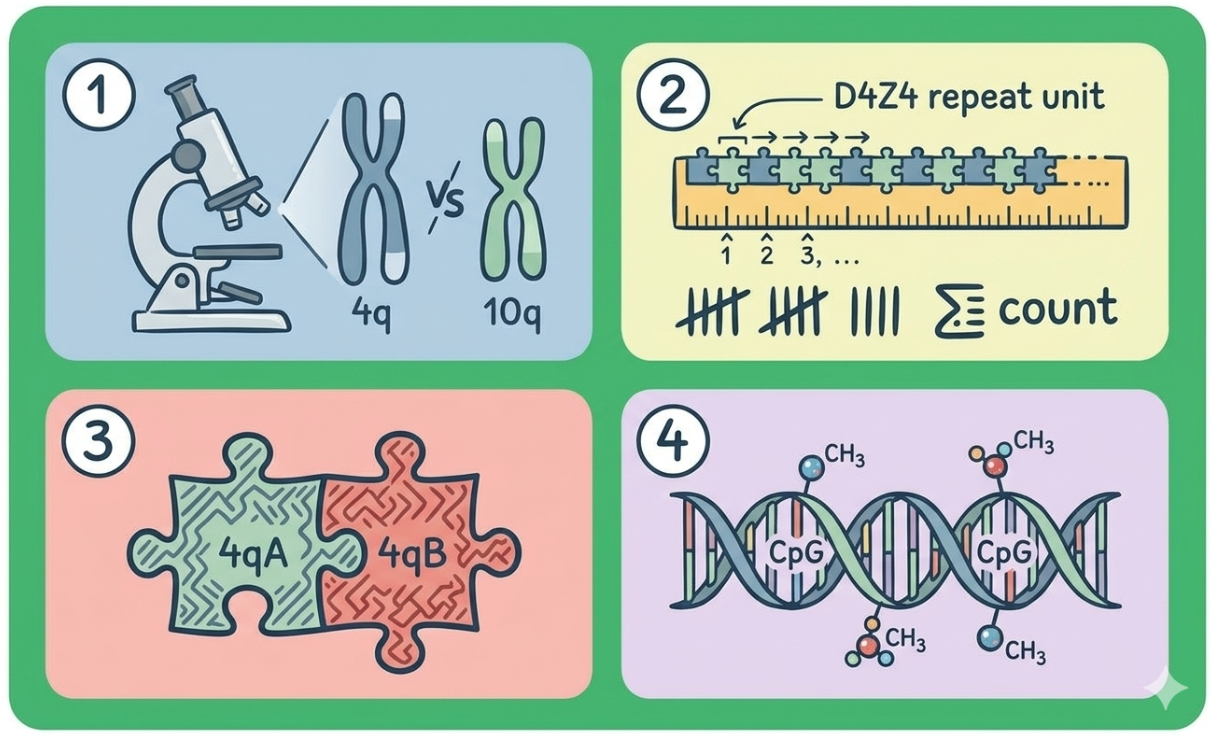
Unlocking the “Unmappable” D4Z4 Repeat: How 3billion Mastered FSHD Diagnosis with Long-Read Sequencing
Summary Despite rapid advances in genomics, certain regions of the human genome have remained “black boxes.” At the forefront of these challenges is the D4Z4 repeat region. Recently, 3billion successfully introduced advanced, dedicated D4Z4 analysis tools alongside Long-Read sequencing, turning technical theory into real-world patient diagnoses. Here is how we overcame one of the most…
-
유전체 분석의 ‘난공불락’ D4Z4 Repeat, Long-read와 전용 분석 툴로 뚫어내다!
핵심 요약 유전체 분석 기술이 눈부시게 발전했지만, 인간 유전체(Genome)에는 여전히 분석이 극도로 까다로운 ‘블랙박스’ 영역들이 존재합니다. 대표적인 곳이 바로 D4Z4 Repeat(반복 서열) 영역인데요. 최근 쓰리빌리언은 Long-read 데이터와 최신 전용 분석툴을 신속히 도입해, 실제 환자 샘플 진단까지 성공적으로 마쳤습니다. 오늘 포스팅에서는 D4Z4 분석이 왜 그토록 어려웠는지, 그리고 저희 팀이 이 난관을 어떻게 극복해냈는지 비하인드 스토리를 전해드립니다.…
-

Mitochondrial Disease Doesn’t Arrive Looking Typical
Key findings The picture we wait for Ask a clinician to describe mitochondrial disease and you’ll usually hear the same picture: Elevated lactate. Ragged-red fibers on biopsy. A child with multi-organ involvement. The problem is that mtDNA variants are rarely suspected until that picture appears. And when the picture never appears, there is no opportunity…
-
미토콘드리아 질환은 ‘전형적인 환자’로 오지 않습니다.
핵심 요약 우리가 미토콘드리아 질환을 떠올리는 순간 미토콘드리아 질환이라고 하면 대개 이런 그림이 떠오릅니다. “젖산이 올라가 있고, 근생검에서 ragged-red fiber가 보이고, 여러 장기를 동시에 침범하는 소아 환자” 문제는 이 그림이 그려져야 mtDNA 변이를 의심하기 시작한다는 데 있습니다. 그림이 그려지지 않으면 검사를 고려하지 않게 되고, 그 판단이 맞았는지 확인할 기회는 오지 않습니다. 그래서 반대 방향으로 확인해봤습니다.…
-
![[On the Road to Meet] “Designing the System Together as True Partners” — Changdeok Ji, Rare Disease Business Architect (Part 2)](http://d15q5w6b9vqac5.cloudfront.net/wp-content/uploads/2026/07/28163234/%EC%8D%B8%EB%84%A4%EC%9D%BC_2.webp)
[On the Road to Meet] “Designing the System Together as True Partners” — Changdeok Ji, Rare Disease Business Architect (Part 2)
Key Highlights Recap of Part 1 In Part 1, Changdeok Ji shared his transition from primary care blockbusters to the rare disease space. He detailed how a tripartite alliance [Pharma – AI Diagnostics – Distributor] expanded the overall diagnostic market instead of fighting over existing market share, accelerating time-to-diagnosis for rare disease patients. PART 3.…
-
[On the Road to Meet] “Expanding the Market to Speed Up Diagnosis” — Changdeok Ji, Rare Disease Business Architect (Part 1)
Key Highlights Healthcare professionals stand on the front lines of changing rare disease patients’ lives. Yet, bridging the gap between identifying a rare condition and delivering treatment is a journey too complex for physicians to navigate alone. True transformation happens when the vision of clinicians aligns with the innovation of diagnostic providers and the resources…
-
「만나러 갑니다」 “시스템을 함께 설계하는 파트너를 꿈꾸며” — 희귀질환 비즈니스 아키텍트, 지창덕 상무 (下)
Key Highlights 지난 1편 이야기 (Recap) 1편에서는 지창덕 상무가 안정적인 블록버스터 영역을 떠나 희귀질환 분야로 뛰어든 계기와 함께, [제약사-진단사-유통사] 3자 협력을 통해 기존 파이를 나누는 대신 진단 시장 자체를 확대해 환자의 진단 시간을 당긴 혁신적인 비즈니스 모델 구축기를 다루었습니다. PART 3. 약 도입과 급여화, 그리고 파트너십 Q. 약을 들여오는 것과 급여를 받아내는 것, 어느 쪽이…
-
「만나러 갑니다」 “파이를 키워 환자의 시간을 당기다” — 희귀질환 비즈니스 아키텍트, 지창덕 상무 (上)
Key Highlights 희귀질환 환자의 삶을 바꾸는 최전선에는 의료진이 있습니다. 하지만 하나의 질환을 찾아내고 치료까지 연결하는 과정은 의사 한 사람의 힘만으로는 완성되기 어렵습니다. 진단 기술을 만드는 기업과 치료제를 공급하는 제약사까지, 다양한 영역의 에너지와 열정이 맞물릴 때 비로소 현장의 변화가 만들어집니다. 오늘 만난 지창덕 상무는 제약업계의 시각에서 희귀질환 진단과 치료의 판을 어떻게 확장해 왔는지 이야기합니다. 의료진과 제약사,…
-

Sudden Death in Healthy Adults: Why a “Normal” Genetic Test Doesn’t Mean You’re Safe from Brugada Syndrome
TL;DR Imagine a seemingly healthy adult, in the prime of their life, suddenly dying in their sleep or collapsing without warning. When an autopsy reveals a structurally perfect heart, the cause is often classified under Sudden Arrhythmic Death Syndrome (SADS). The silent driver behind many of these tragedies is Brugada Syndrome (BrS). BrS primarily strikes otherwise healthy…
-

건강하던 성인의 돌연사, 유전자 검사 정상인데도 안심할 수 없는 이유: 브루가다 증후군(Brugada Syndrome)의 경고
요약 (TL;DR) 살면서 가장 두려운 순간 중 하나는 어제까지 멀쩡히 건강하던 사람이 어느 날 밤 잠자리에서, 혹은 갑자기 길을 걷다 돌연사(급사)하는 비극을 마주할 때일 것입니다. 부검을 해도 심장의 구조적 문제가 전혀 나타나지 않는 ‘돌연 부정맥사 증후군(SADS)’ 의 핵심 배후에는 ‘브루가다 증후군(Brugada Syndrome, BrS)’이라는 무서운 희귀성 부정맥 질환이 숨어 있습니다. 이 질환은 30~50대의 건장한 중년 남성에게 주로 발생하며,…