[카테고리:] 블로그 (Blog)
-
Genetic Test Results Now Available Within 4 Weeks
Faster Results. Earlier Answers. The turnaround time (TAT) for 3billion’s genetic testing services, previously set at five weeks, has been shortened to within four weeks. The new timeline applies to samples received on or after October 19, 2026. This change applies to services with the previous five-week turnaround time. Existing two-week services remain unchanged. 3billion…
-
이제 4주 내 유전자 검사 결과가 제공됩니다.
Faster Results. Earlier Answers. 기존 5주였던 쓰리빌리언의 유전자 검사 서비스 결과 제공 기간(Turnaround Time, TAT)이 4주 이내로 단축됩니다. 변경된 기준은 2026년 10월 19일부터 접수되는 검체에 적용됩니다. 이번 변경은 기존 5주 서비스에 적용되며, 기존 2주 서비스는 동일하게 유지됩니다. 쓰리빌리언은 환자와 의료진에게 검사 결과를 더 빠르게 제공하기 위해 검사 과정 전반의 업무 효율을 지속적으로 개선하고 있습니다. 유전자…
-
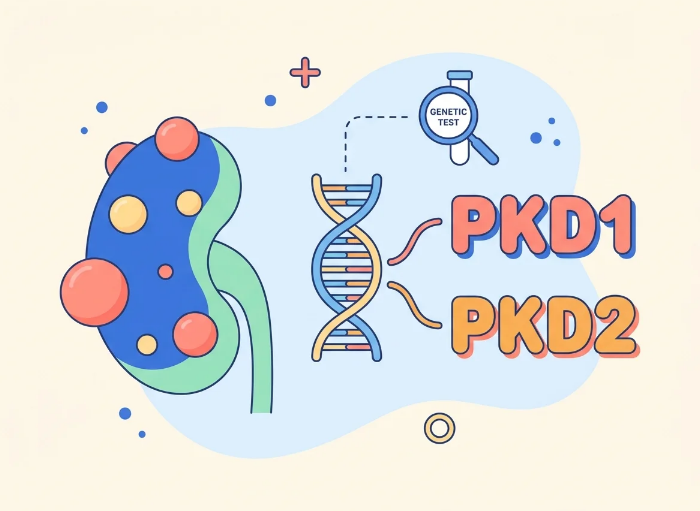
다낭성 신장병, 유전자 검사로 어디까지 알 수 있을까?
상염색체 우성 다낭성 신장병(ADPKD)은 가장 흔한 유전성 신장 질환으로, 말기 신부전의 약 5%를 차지합니다. 대부분은 PKD1(약 85%) 또는 PKD2(약 15%)의 병원성 변이에서 비롯되지만, 일부는 다른 낭성 신장 유전자와 관련이 있습니다. 유전자 검사는 확진을 내리고, 유전 위험을 분명히 하며, 진짜 병을 일으키는 변이와 겉보기만 비슷한 양성 변이를 가려내는 데 도움을 줍니다. 변이의 종류가 중요합니다. 단백질을 잘라내는…
-
Polycystic Kidney Disease: When Is Genetic Testing Useful?
Autosomal dominant polycystic kidney disease (ADPKD) is the most common inherited kidney disorder and driving about 5% of end-stage kidney disease. Most cases trace to a pathogenic variant in PKD1 (~85%) or PKD2 (~15%), though a minority involve other cystic-kidney genes. Genetic testing confirms uncertain diagnoses, clarifies family risk, and helps distinguish truly pathogenic variants…
-
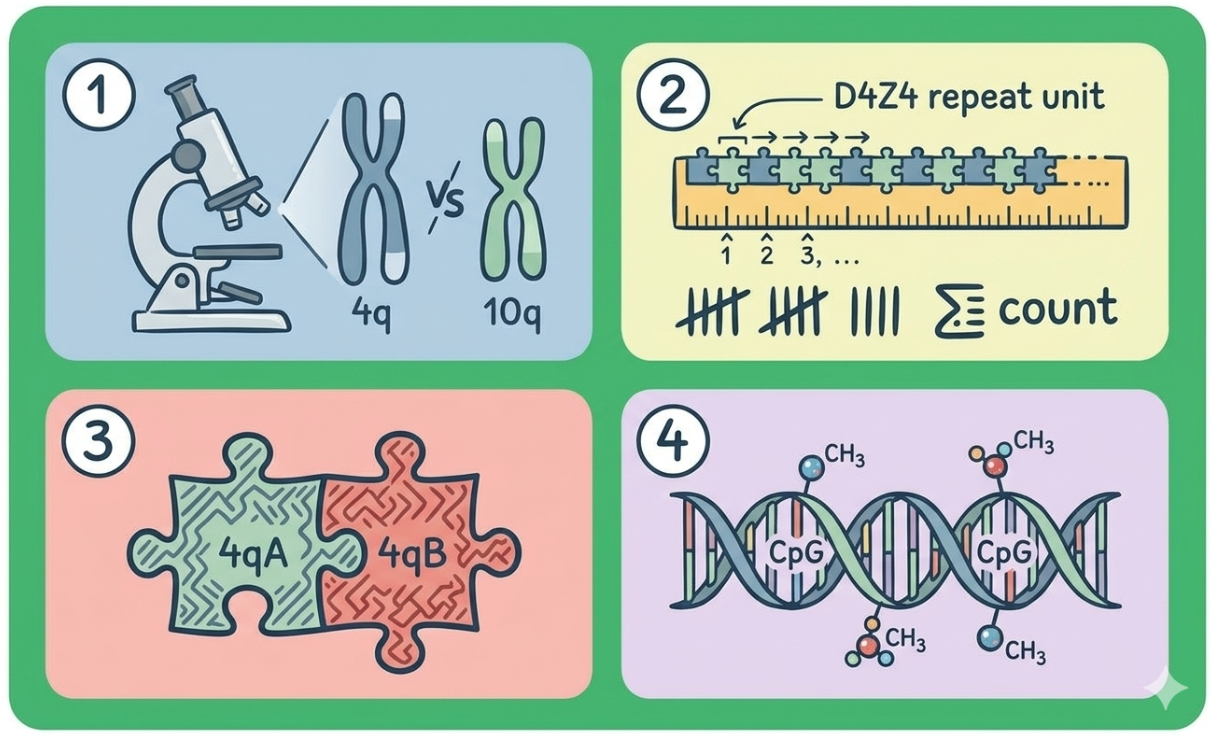
Unlocking the “Unmappable” D4Z4 Repeat: How 3billion Mastered FSHD Diagnosis with Long-Read Sequencing
Summary Despite rapid advances in genomics, certain regions of the human genome have remained “black boxes.” At the forefront of these challenges is the D4Z4 repeat region. Recently, 3billion successfully introduced advanced, dedicated D4Z4 analysis tools alongside Long-Read sequencing, turning technical theory into real-world patient diagnoses. Here is how we overcame one of the most…
-
유전체 분석의 ‘난공불락’ D4Z4 Repeat, Long-read와 전용 분석 툴로 뚫어내다!
핵심 요약 유전체 분석 기술이 눈부시게 발전했지만, 인간 유전체(Genome)에는 여전히 분석이 극도로 까다로운 ‘블랙박스’ 영역들이 존재합니다. 대표적인 곳이 바로 D4Z4 Repeat(반복 서열) 영역인데요. 최근 쓰리빌리언은 Long-read 데이터와 최신 전용 분석툴을 신속히 도입해, 실제 환자 샘플 진단까지 성공적으로 마쳤습니다. 오늘 포스팅에서는 D4Z4 분석이 왜 그토록 어려웠는지, 그리고 저희 팀이 이 난관을 어떻게 극복해냈는지 비하인드 스토리를 전해드립니다.…
-
![[Interpretation Notes #3] Why IGV Read Counts Differ from GATK HaplotypeCaller Allelic Depth (AD)](http://d15q5w6b9vqac5.cloudfront.net/wp-content/uploads/2026/10/05220151/IGV-read-count%EC%99%80-GATK-HaplotypeCaller-AD-main-5.png)
[Interpretation Notes #3] Why IGV Read Counts Differ from GATK HaplotypeCaller Allelic Depth (AD)
When reviewing variants detected through next-generation sequencing (NGS), researchers and clinical genomic analysts examine the variant information recorded in the Variant Call Format (VCF) together with the sequencing reads observed in the Integrative Genomics Viewer (IGV). In the course of this, the number of REF and ALT reads counted directly in IGV sometimes does not…
-
![[판독노트 #3] 왜 IGV read count와 GATK AD 값이 다를까?](http://d15q5w6b9vqac5.cloudfront.net/wp-content/uploads/2026/10/05220122/IGV-read-count%EC%99%80-GATK-HaplotypeCaller-AD-main-4.png)
[판독노트 #3] 왜 IGV read count와 GATK AD 값이 다를까?
차세대염기서열분석(Next-Generation Sequencing, NGS)을 통해 검출된 변이를 검토할 때, 연구자와 임상 유전체 분석가는 Variant Call Format(VCF)에 기록된 변이 정보와 Integrative Genomics Viewer(IGV)에서 관찰되는 sequencing read를 함께 확인합니다. 이 과정에서 IGV에서 직접 확인한 REF 및 ALT read의 개수가 VCF에 기록된 Allelic Depth(AD) 값과 일치하지 않는 경우가 있습니다. 예를 들어, IGV에서는 ALT allele을 지지하는 read가 25개로 관찰되지만 GATK…
-

What 10,808 Newborns Taught Us About Genomic Newborn Screening
In 2025, four studies reported at once Genomic newborn screening (gNBS) has been studied in pilot programs for years — the International Consortium on Newborn Sequencing now counts over 80 projects across more than 50 countries. What made 2025 different is that four large studies in the US, Belgium, and Australia published initial results within…
-
13 Patients Found New Answers Through Reanalysis of Genetic Testing: Sep 2026
Is a single genetic test result the end of the diagnostic journey?At 3billion, we believe diagnosis is an ongoing process. That’s why we focus not only on the test itself, but on what comes after:Reanalysis. For all cases previously reported as Inconclusive or Negative,3billion performs automated reanalysis through a continuous system. (Related article: What Is…