[태그:] WES
-

Mitochondrial Disease Doesn’t Arrive Looking Typical
Key findings The picture we wait for Ask a clinician to describe mitochondrial disease and you’ll usually hear the same picture: Elevated lactate. Ragged-red fibers on biopsy. A child with multi-organ involvement. The problem is that mtDNA variants are rarely suspected until that picture appears. And when the picture never appears, there is no opportunity…
-
미토콘드리아 질환은 ‘전형적인 환자’로 오지 않습니다.
핵심 요약 우리가 미토콘드리아 질환을 떠올리는 순간 미토콘드리아 질환이라고 하면 대개 이런 그림이 떠오릅니다. “젖산이 올라가 있고, 근생검에서 ragged-red fiber가 보이고, 여러 장기를 동시에 침범하는 소아 환자” 문제는 이 그림이 그려져야 mtDNA 변이를 의심하기 시작한다는 데 있습니다. 그림이 그려지지 않으면 검사를 고려하지 않게 되고, 그 판단이 맞았는지 확인할 기회는 오지 않습니다. 그래서 반대 방향으로 확인해봤습니다.…
-

「만나러 갑니다」 ② 놓치지 않으려면 – 한 가계에서 찾은 5명의 파브리병
파브리병 진단, 그리고 알수록 겸손해지는 일 1편에서 이준화 교수님은 “유전자 검사로 진단이 되어도 치료약이 개발된 경우는 5% 정도”라고 하셨습니다. 그렇다면 나머지, 치료가 있는 질환에서는 진단이 얼마나 결정적일까요. 2편은 그 5% 안에 드는 질환 — 파브리병 이야기로 시작합니다. 한국선천성대사질환협회가 지원하는 ‘LSD 진단 활성화 사업’을 통해 함께 마주한 사례들입니다. 최근 한 가계에서 5명의 파브리병 환자를 찾게 된…
-

유전자 검사 ‘음성(Negative)’, 환자에게 어떻게 설명할까 — 진료실 설명 문구 모음
희귀질환 유전자 검사에서 원인을 찾지 못했을 때, 환자와 가족이 가장 먼저 묻는 말은 대개 비슷합니다. “그럼 유전이 아닌 건가요?” 짧게 답하기 어려운 질문입니다. “아니라고 단정할 수는 없다”는 설명이 환자에게는 “결국 모른다는 뜻인가”로 들리기 쉽고, 검사 자체가 의미 없었다는 실망으로 이어지기도 합니다. 이 글은 그 순간에 쓸 수 있는 설명 문구를 정리해보았습니다. 회색 박스 안 문장을…
-

롱리드를 이용한 미진단 해결 사례 (1) — 상염색체 열성 질환에서 놓친 변이를 찾다.
요약 상염색체 열성 질환이 의심되지만 숏리드 시퀀싱(SRS)에서 병원성 대립유전자가 하나만 검출된 미진단 환자 78명에게, 서울대병원 연구팀이 상염색체 열성 유전자 56개를 포획하는 타깃 롱리드 시퀀싱(전장 게놈이 아닌 표적 방식)을 적용했습니다. 그 결과 78명 중 20명(25.6%)에서 놓쳤던 변이를 회수했습니다. 회수 경로는 구조변이 검출 10명, Deep intron 변이의 splicing 기능 검증 3명, haplotype phasing을 통한 VUS 재분류 7명입니다.…
-
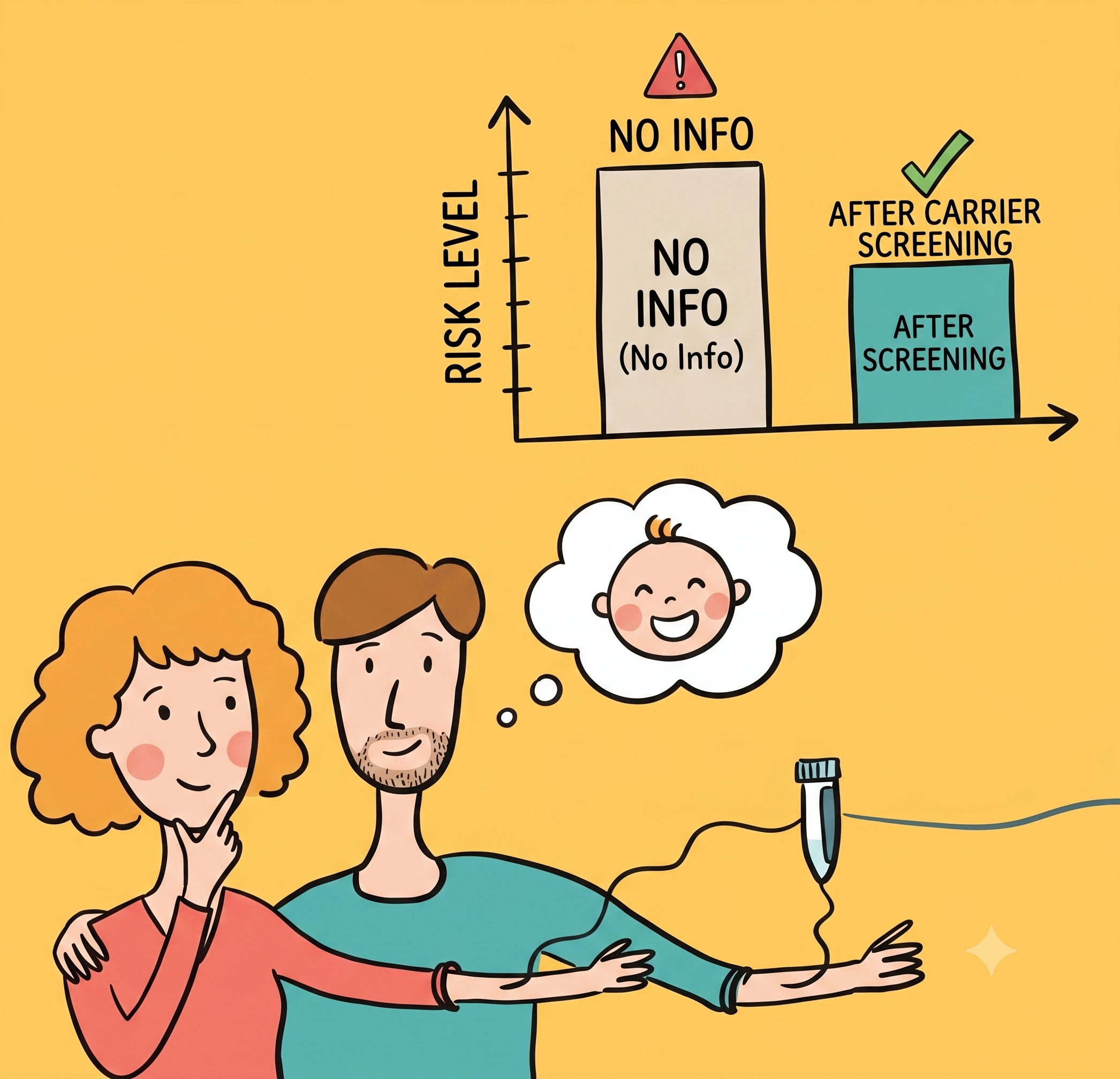
Reproductive Genetic Carrier Screening (RGCS): When and Who to Recommend It To — A Clinical Guide from 5 Year Outcome Data
Key Takeaways Reproductive genetic carrier screening (RGCS) is no longer reserved for patients with a specific family history or ancestry. Recent guidelines in the US, Europe, and Australia increasingly recommend offering RGCS to anyone planning a pregnancy or in early pregnancy, regardless of background. The gap is between recommendation and practice. When to offer it,…
-
생식 유전자 캐리어 스크리닝(RGCS), 언제·누구에게 권해야 할까 — 5년 추적 근거로 본 임상 가이드
핵심 요약 RGCS는 더 이상 특정 가족력이나 인종적 배경이 있는 사람에게만 권하는 검사가 아닙니다. 최근 미국·유럽·호주의 여러 진료지침은 임신을 계획 중이거나 임신 초기인 모든 사람에게 RGCS를 제공하도록 권고하는 방향으로 이동하고 있습니다. 문제는 “권고”와 “실제 임상 현장에서의 안착” 사이에 거리가 있다는 점입니다. 언제, 어떤 환자에게, 어떻게 설명하고, 결과를 받은 뒤에는 어떻게 상담해야 하는지에 대한 구체적인 근거는…
-
![[Clinical Insight] “Rarely Diagnosed, Not Rare” – An Interview with Dr. Dmytro Tokariev](http://d15q5w6b9vqac5.cloudfront.net/wp-content/uploads/2026/06/25144424/%EC%8D%B8%EB%84%A4%EC%9D%BC.webp)
[Clinical Insight] “Rarely Diagnosed, Not Rare” – An Interview with Dr. Dmytro Tokariev
We are thrilled to share a very special interview with Dr. Dmytro Tokariev, a dedicated pediatric genetic diagnostic expert who has not only been a loyal user of 3billion’s services but has also built a wonderful relationship with us as a regular reader of my weekly letters! Working on the front lines of pediatrics and…
-
[Clinical Insight] “세상에 희귀한 질환은 없다, 단지 드물게 진단될 뿐” – Dr. Dmytro Tokariev 인터뷰
요약 쓰리빌리언의 서비스를 꾸준히 이용해 주실 뿐만 아니라, 매주 제가 보내드리는 레터도 정독해 주시며 오랜 시간 좋은 유대를 쌓아온 소아 유전진단 전문가, 드미트로(Dmytro Tokariev) 선생님과의 특별한 인터뷰를 소개합니다! 소아청소년과 및 완화의료 현장에서 매일 고군분투하시는 선생님의 답변 속에는 희귀 질환 환아들을 향한 남다른 진심과 현장의 생생한 목소리가 고스란히 녹아 있었는데요. 특히, 고가의 장비 대신 의사의 예리한…
-

Hereditary Cancer Germline Testing Across 21 European Countries: Why the Same Patient Can Receive a Different Diagnosis
Key Takeaways A patient with the same suspected hereditary cancer can have an actionable variant identified — or missed — depending on which country and which laboratory handles the case. Often what separates those outcomes is not the patient’s genome, but the composition of the panel applied to them. A study in the European Journal…