[작성자:] Claire
-
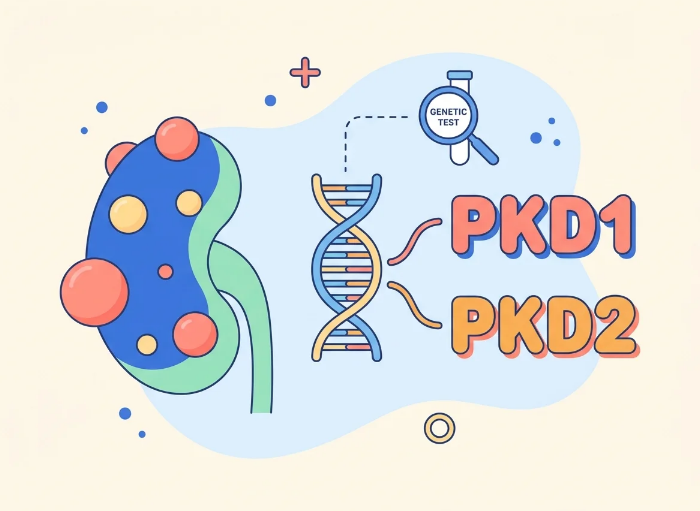
다낭성 신장병, 유전자 검사로 어디까지 알 수 있을까?
상염색체 우성 다낭성 신장병(ADPKD)은 가장 흔한 유전성 신장 질환으로, 말기 신부전의 약 5%를 차지합니다. 대부분은 PKD1(약 85%) 또는 PKD2(약 15%)의 병원성 변이에서 비롯되지만, 일부는 다른 낭성 신장 유전자와 관련이 있습니다. 유전자 검사는 확진을 내리고, 유전 위험을 분명히 하며, 진짜 병을 일으키는 변이와 겉보기만 비슷한 양성 변이를 가려내는 데 도움을 줍니다. 변이의 종류가 중요합니다. 단백질을 잘라내는…
-
Polycystic Kidney Disease: When Is Genetic Testing Useful?
Autosomal dominant polycystic kidney disease (ADPKD) is the most common inherited kidney disorder and driving about 5% of end-stage kidney disease. Most cases trace to a pathogenic variant in PKD1 (~85%) or PKD2 (~15%), though a minority involve other cystic-kidney genes. Genetic testing confirms uncertain diagnoses, clarifies family risk, and helps distinguish truly pathogenic variants…
-
Sanger 가족검사 가이드
ko-label: Sanger 가족검사 가이드 en-label: Sanger Family Testing Guide related-series: ngs-data-analysis-workflow ko-description: 유전자 검사에서 발견된 변이를 가족검사로 확인하는 과정을 설명합니다. 가족검사가 필요한 이유, Sanger로 확인할 수 있는 변이와 그렇지 않은 변이, 결과지의 변이 정보를 읽는 법까지 담았습니다. en-description: Explaining how variants found in a genetic test are confirmed through family testing. It covers why family…
-

What 10,808 Newborns Taught Us About Genomic Newborn Screening
In 2025, four studies reported at once Genomic newborn screening (gNBS) has been studied in pilot programs for years — the International Consortium on Newborn Sequencing now counts over 80 projects across more than 50 countries. What made 2025 different is that four large studies in the US, Belgium, and Australia published initial results within…
-
13 Patients Found New Answers Through Reanalysis of Genetic Testing: Sep 2026
Is a single genetic test result the end of the diagnostic journey?At 3billion, we believe diagnosis is an ongoing process. That’s why we focus not only on the test itself, but on what comes after:Reanalysis. For all cases previously reported as Inconclusive or Negative,3billion performs automated reanalysis through a continuous system. (Related article: What Is…