[태그:] WGS
-

Mitochondrial Disease Doesn’t Arrive Looking Typical
Key findings The picture we wait for Ask a clinician to describe mitochondrial disease and you’ll usually hear the same picture: Elevated lactate. Ragged-red fibers on biopsy. A child with multi-organ involvement. The problem is that mtDNA variants are rarely suspected until that picture appears. And when the picture never appears, there is no opportunity…
-
미토콘드리아 질환은 ‘전형적인 환자’로 오지 않습니다.
핵심 요약 우리가 미토콘드리아 질환을 떠올리는 순간 미토콘드리아 질환이라고 하면 대개 이런 그림이 떠오릅니다. “젖산이 올라가 있고, 근생검에서 ragged-red fiber가 보이고, 여러 장기를 동시에 침범하는 소아 환자” 문제는 이 그림이 그려져야 mtDNA 변이를 의심하기 시작한다는 데 있습니다. 그림이 그려지지 않으면 검사를 고려하지 않게 되고, 그 판단이 맞았는지 확인할 기회는 오지 않습니다. 그래서 반대 방향으로 확인해봤습니다.…
-

유전자 검사 ‘음성(Negative)’, 환자에게 어떻게 설명할까 — 진료실 설명 문구 모음
희귀질환 유전자 검사에서 원인을 찾지 못했을 때, 환자와 가족이 가장 먼저 묻는 말은 대개 비슷합니다. “그럼 유전이 아닌 건가요?” 짧게 답하기 어려운 질문입니다. “아니라고 단정할 수는 없다”는 설명이 환자에게는 “결국 모른다는 뜻인가”로 들리기 쉽고, 검사 자체가 의미 없었다는 실망으로 이어지기도 합니다. 이 글은 그 순간에 쓸 수 있는 설명 문구를 정리해보았습니다. 회색 박스 안 문장을…
-
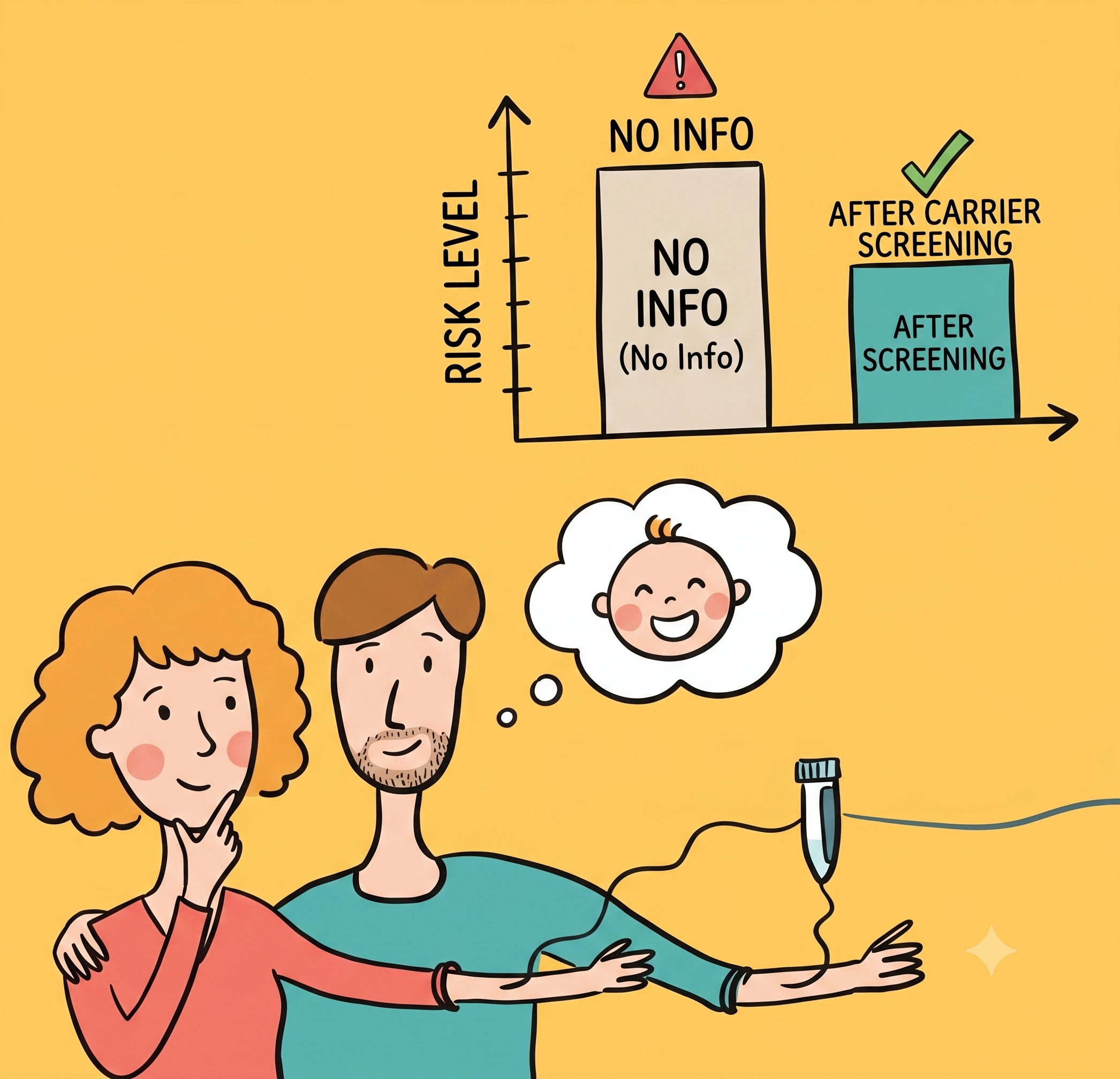
Reproductive Genetic Carrier Screening (RGCS): When and Who to Recommend It To — A Clinical Guide from 5 Year Outcome Data
Key Takeaways Reproductive genetic carrier screening (RGCS) is no longer reserved for patients with a specific family history or ancestry. Recent guidelines in the US, Europe, and Australia increasingly recommend offering RGCS to anyone planning a pregnancy or in early pregnancy, regardless of background. The gap is between recommendation and practice. When to offer it,…
-
생식 유전자 캐리어 스크리닝(RGCS), 언제·누구에게 권해야 할까 — 5년 추적 근거로 본 임상 가이드
핵심 요약 RGCS는 더 이상 특정 가족력이나 인종적 배경이 있는 사람에게만 권하는 검사가 아닙니다. 최근 미국·유럽·호주의 여러 진료지침은 임신을 계획 중이거나 임신 초기인 모든 사람에게 RGCS를 제공하도록 권고하는 방향으로 이동하고 있습니다. 문제는 “권고”와 “실제 임상 현장에서의 안착” 사이에 거리가 있다는 점입니다. 언제, 어떤 환자에게, 어떻게 설명하고, 결과를 받은 뒤에는 어떻게 상담해야 하는지에 대한 구체적인 근거는…
-

유전체 신생아 선별(gNBS), 기존 검사가 놓친 8명을 찾다 — 칭다오 9,992명 WGS 코호트
핵심요약 들어가며 유전체 기반 신생아 선별(gNBS)을 두고 임상 현장이 던지는 질문은 단순합니다. 기존 생화학 선별이 이미 하던 일을 WGS가 정말 더 잘하는가, 아니면 더 많은 변이를 보여줄 뿐인가. 2026년 6월 Nature Health에 발표된 칭다오 전향적 코호트 연구는 이 질문에 비교적 직접적인 답을 줍니다. 출생 직후 신생아 9,992명에게 WGS를 시행하고, 결과를 최대 약 5년까지 추적하며 기존…
-
Genomic Newborn Screening (gNBS) Caught 8 Cases Conventional Tests Missed — A 9,992-Newborn WGS Cohort From Qingdao
Summary Why this question matters Clinicians weighing gNBS tend to ask one practical question: does WGS actually do the job biochemical screening already does — only better — or does it simply surface more variants? A prospective cohort study published in Nature Health in June 2026 offers a fairly direct answer. Researchers performed WGS on…
-

NICU 아이들을 위한 Rapid WGS: 유전체 진단은 얼마나 빨라질 수 있을까
신생아 집중치료실 (Neonatal Intensive Care Unit, NICU)은 늘 시간과의 싸움입니다. 생후 며칠 혹은 몇 주밖에 되지 않은 아이가 원인을 알 수 없는 중증 증상을 보일 때, 의료진은 제한된 정보 안에서 빠른 치료 결정을 내려야 합니다. 그러나 유전적 원인이 의심되는 상황에서도, 기존 검사 체계에서는 정확한 진단까지 상당한 시간이 소요되는 경우가 많습니다. 그 사이 환아의 상태는 빠르게…
-
Rapid WGS for NICU Patients: When time determines survival, how fast can genomic diagnosis be?
The Neonatal Intensive Care Unit (NICU) is, by nature, a race against time. When a newborn—only days or weeks old—presents with severe symptoms of unknown origin, clinicians must make critical treatment decisions with limited information and under intense time pressure. Even when a genetic cause is strongly suspected, conventional diagnostic workflows often require weeks or…
-

Key to Differential Diagnosis of hEDS vs. vEDS: Limitations of the Beighton Score and the Role of Genetic Testing
Simple Flexibility or a Life-Threatening Connective Tissue Disorder? The Diagnostic Trap — Where “Flexible” Ends and “Life-Threatening” Begins Imagine a female patient in her 20s presenting with excessive joint laxity. She has a Beighton Score of 7, skin hyperextensibility, and a history of recurrent dislocations. At first glance, this appears consistent with hypermobile Ehlers-Danlos syndrome…