[태그:] 영문
-

Genetic Test Results Now Available Within 4 Weeks
Faster Results. Earlier Answers. The turnaround time (TAT) for 3billion’s genetic testing services, previously set at five weeks, has been shortened to within four weeks. The new timeline applies to samples received on or after October 19, 2026. This change applies to services with the previous five-week turnaround time. Existing two-week services remain unchanged. 3billion…
-

“10 Years of Answers, Together” 3billion Celebrates 10th Anniversary
“10 Years of Answers, Together”3billion Celebrates 10th Anniversary SEOUL, South Korea — 3billion, an AI-powered rare disease genetic diagnostics company, announced that it has launched “10 Years of Answers, Together,” a campaign marking its 10th anniversary, reflecting on the past decade, and sharing its vision for the future. The campaign aims to express gratitude to…
-
![[Interpretation Notes #3] Why IGV Read Counts Differ from GATK HaplotypeCaller Allelic Depth (AD)](http://d15q5w6b9vqac5.cloudfront.net/wp-content/uploads/2026/10/05220151/IGV-read-count%EC%99%80-GATK-HaplotypeCaller-AD-main-5.png)
[Interpretation Notes #3] Why IGV Read Counts Differ from GATK HaplotypeCaller Allelic Depth (AD)
When reviewing variants detected through next-generation sequencing (NGS), researchers and clinical genomic analysts examine the variant information recorded in the Variant Call Format (VCF) together with the sequencing reads observed in the Integrative Genomics Viewer (IGV). In the course of this, the number of REF and ALT reads counted directly in IGV sometimes does not…
-

3billion Appoints Erik Zmuda to Lead U.S. Clinical Lab Buildout
“3billion Recruits U.S. Clinical Genomics Expertto Lead Laboratory Buildout and Accreditation” 3billion Appoints Former Myriad Genetics Expert Erik Zmuda as Vice President, Accelerating U.S. Clinical Laboratory Buildout and Accreditation ■ Former Myriad Genetics leader with 500,000+ annual test experience■ To lead 3billion US’s clinical laboratory in Austin, Texas■ CLIA certification and CAP accreditation to support…
-

3billion Joins Korean ARPA-H ‘ARISE’ Collaborative Research Project
“Expanding Rare Disease Genetic Diagnostics Expertise into ASO Therapeutics Research” SEOUL, South Korea, September 22, 2026 — 3billion, an AI-powered rare disease genetic diagnostics company, announced that it has been selected as a joint research and development institute for the “Development and Validation of a Proactive N-of-Many ASO Therapeutics Platform for Rare Diseases” project under…
-
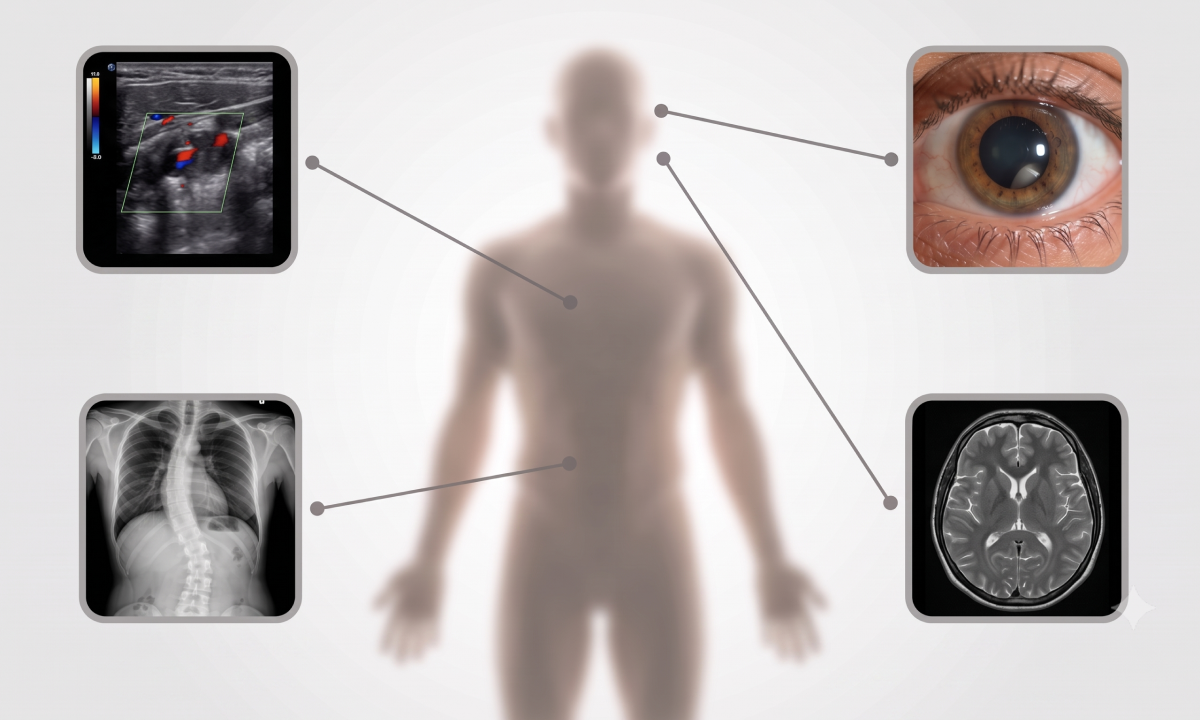
Episode 15: Homocystinuria — Causative Genes and How to Tell Them Apart
In the body, methionine taken in through food is used across a number of metabolic processes. One of the important intermediate metabolites generated along the way is homocysteine. Under normal circumstances, homocysteine is metabolized either through the remethylation pathway, in which it is converted back into methionine, or through the transsulfuration pathway, in which it…
-

3billion Accelerates Global Expansion of AI Variant Interpretation Platform
“GEBRA Reaches 30+ Countries with Enhanced Service Capabilities” ■ Commercially adopted by leading medical and research institutions; used or evaluated in 30+ countries■ Earns the AWS Qualified Software designation, underscoring platform security and reliability■ Enhances online demo access and expands webinars for clinicians SEOUL, South Korea, September 9, 2026 — 3billion, an AI-powered rare disease…
-
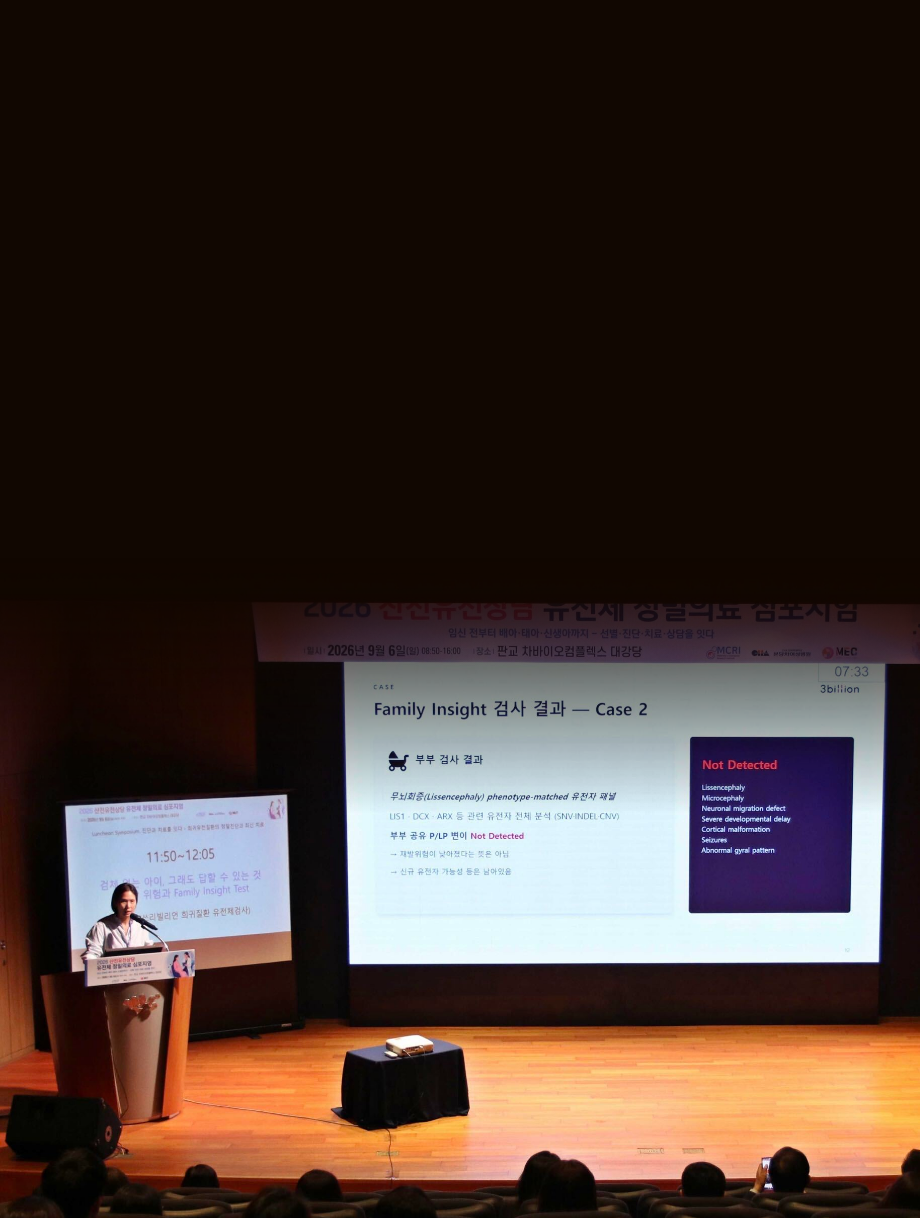
3billion Presents the Family Insight Test at Prenatal Genetic Counseling Symposium
“Finding Genetic Causes Without a Child’s Sample” ■ 3billion presents the Family Insight Test at the 2026 Prenatal Genetic Counseling and Genomic Precision Medicine Symposium ■ Family-based genomic analysis can help identify potential genetic causes and assess recurrence risk even when a child’s sample is unavailable SEOUL, South Korea, September 7, 2026 — 3billion, an…
-

Episode 14: The Cause of Inherited Macular Degeneration and ABCA4
When the center of the visual field gradually blurs and reading or recognizing faces becomes difficult, an abnormality of the macula — the central region of the retina — may be suspected. A number of conditions affect the macula, and among them Stargardt disease is a representative inherited macular degeneration that begins in childhood or…
-
![[Baby Care #11] Pregnancy Sleep Position: Evidence on Stillbirth Risk](http://d15q5w6b9vqac5.cloudfront.net/wp-content/uploads/2026/08/27104116/top-view-pregnant-woman-using-nursing-pillow-scaled.jpg)
[Baby Care #11] Pregnancy Sleep Position: Evidence on Stillbirth Risk
The safest sleep position during the third trimester of pregnancy (after 28 weeks) is on your side, either left or right. Sleeping on your back (supine position) in late pregnancy is associated with a more than two-fold increased risk of late stillbirth. The supine sleeping position can also reduce fetal growth, increasing the odds of…